Writing as Reflection: How Stories Become a Path to Self-Discovery
Discover how reflective writing, storytelling, and journaling improve emotional well-being, creativity, and self-awareness. Explore research-backed benefits and why stories become powerful tools for personal growth.on Jul 17, 2026
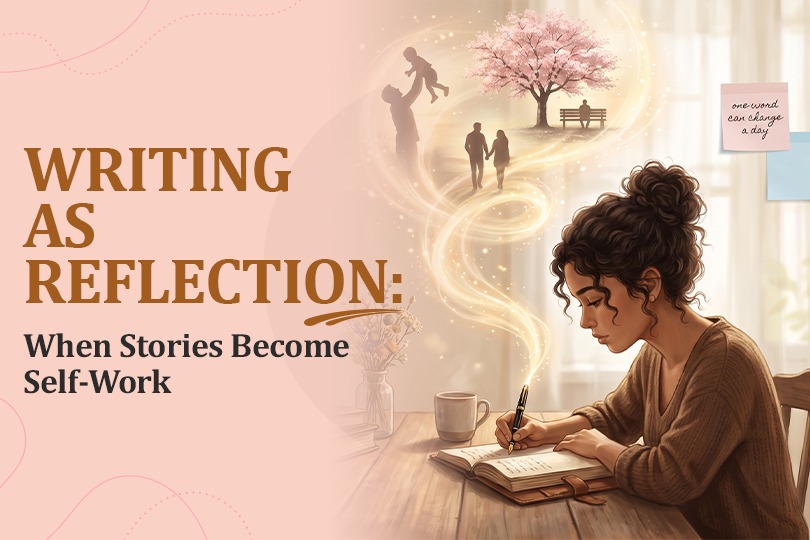
Every story begins somewhere. Sometimes it starts with an idea. Sometimes with a memory. And sometimes, it begins with a question we are too afraid to ask ourselves.
For many writers, storytelling is far more than an act of creation - it is an act of reflection. Whether through memoir, fiction, poetry, or personal essays, writing often becomes a mirror that reveals emotions, patterns, fears, and hopes that everyday life keeps hidden.
In an age dominated by fast content and constant distraction, reflective writing offers something increasingly rare: the opportunity to slow down, observe ourselves honestly, and make meaning of our experiences.
Stories, in this sense, become more than entertainment. They become self-work.
What Does "Writing as Reflection" Mean?
Reflective writing is the process of exploring experiences, emotions, and thoughts through language. Unlike academic or informational writing, reflective writing is less concerned with facts and more concerned with understanding.
It asks questions like:
- Why did this experience stay with me?
- What emotion am I avoiding?
- How has this event changed me?
- What story have I been telling myself?
When writers answer these questions - whether consciously or unconsciously - they create narratives that reveal not just characters, but themselves.
This is why some of the world's most memorable novels feel emotionally authentic. The writer has often processed something deeply personal before placing it on the page.
Stories Help Us Understand Ourselves
Psychologists describe human beings as "meaning-making creatures." We naturally organize our memories into stories because narratives help us understand who we are.
This idea forms the foundation of Narrative Identity Theory, developed by psychologist Dan McAdams, which suggests that people build their identities by creating internal life stories that connect their past, present, and future.
Writing gives shape to those stories.
Instead of experiencing life as disconnected events, writers begin seeing patterns, growth, and purpose.
The Science Behind Reflective Writing
The emotional power of writing is supported by decades of psychological research.
One of the earliest and most influential studies by psychologist James W. Pennebaker found that people who wrote about emotionally significant experiences for just 15–20 minutes over several consecutive days experienced measurable improvements in both physical and mental well-being.
Research over the past three decades has linked expressive writing with:
- Reduced stress and anxiety
- Better emotional regulation
- Improved immune functioning
- Greater resilience after trauma
- Enhanced self-awareness
- Improved working memory and cognitive processing
These findings suggest that writing is not simply creative expression - it is also cognitive and emotional processing.
Reflective Writing by the Numbers
Recent research highlights the growing importance of writing for emotional well-being:
- More than 200 peer-reviewed studies have examined the benefits of expressive writing since Pennebaker's original research.
- Regular journaling has been associated with reductions in symptoms of anxiety and depression across multiple clinical studies.
- The global mental wellness industry surpassed US$6 trillion in 2024, reflecting increased interest in practices such as journaling, mindfulness, and self-reflection.
- Millions of people now use digital journaling platforms and writing apps as part of their daily wellness routines.
These trends indicate that reflective writing has moved beyond literary circles into mainstream conversations about mental health and personal development.
Fiction Is Often More Personal Than Memoir
Many readers assume memoir is the most personal literary form.
Ironically, fiction often reveals even more.
Novelists frequently divide their emotions among multiple characters. A protagonist may carry the writer's fear, while another character embodies hope, regret, or ambition.
This emotional distribution allows writers to examine difficult experiences from different perspectives without being confined to factual autobiography.
As Toni Morrison famously observed, writers often discover truths through imagination that facts alone cannot express.
Why Readers Connect with Honest Stories
Readers rarely remember books because every plot point was surprising.
They remember books because they recognized themselves.
A character's loneliness.
A parent's silence.
A failed relationship.
A difficult goodbye.
Authentic storytelling creates emotional recognition. Readers feel understood because writers have first taken the time to understand themselves.
Reflection becomes connection.
Writing Creates Emotional Distance
One of writing's greatest strengths is that it allows us to step outside our experiences.
Instead of simply feeling an emotion, we begin observing it.
A painful memory becomes a scene.
An argument becomes dialogue.
Fear becomes a character.
This psychological distance enables writers to process experiences with greater clarity while reducing emotional overwhelm.
Therapists often use similar principles in narrative therapy, encouraging individuals to externalize problems through storytelling.
The Publishing Industry's Growing Interest in Reflective Narratives
Publishing trends increasingly reflect readers' appetite for emotionally authentic stories.
Memoirs exploring identity, grief, healing, resilience, and mental health continue to perform strongly across global markets.
Similarly, novels centered on emotional growth, personal transformation, and psychological depth have become defining voices in contemporary literature.
Readers today seek stories that help them understand themselves - not just escape reality.
This shift explains the growing popularity of:
- Personal essays
- Literary memoirs
- Autofiction
- Healing narratives
- Mental health literature
- Hybrid nonfiction blending storytelling and psychology
Reflection has become a literary value.
How Writers Can Turn Reflection into Better Storytelling
Reflection does not require extraordinary experiences.
It requires honest observation.
Some practical ways writers can strengthen reflective storytelling include:
- Keep a daily journal without editing yourself.
- Record emotions before recording events.
- Ask "Why?" after every important memory.
- Write scenes instead of summaries.
- Allow contradictions to exist.
- Revisit old writing after several months to notice personal growth.
The goal is not perfection.
The goal is understanding.
Writing Is Not About Having Answers
Many people postpone writing because they believe they need clarity first.
In reality, clarity often arrives because we write.
The blank page becomes a conversation.
Each sentence uncovers another question.
Each paragraph reveals another layer.
The story evolves alongside the person telling it.
That is why writing is both creative work and personal work.
Final Thoughts
Stories change readers because they first change writers.
Every novel, poem, essay, or memoir carries traces of the person who created it. The act of writing invites us to examine our memories, confront uncomfortable truths, reinterpret failures, celebrate resilience, and imagine new possibilities.
In a world that constantly encourages us to produce, writing reminds us to pause.
To notice.
To remember.
To understand.
Perhaps that is the greatest gift of storytelling not that it allows us to escape ourselves, but that it helps us meet ourselves with greater honesty and compassion.
Because sometimes, the most important story we will ever write is the one that teaches us who we are.
Frequently Asked Questions (FAQs)
Is reflective writing the same as journaling?
Not exactly. Journaling records experiences, while reflective writing goes a step further by exploring the meaning, emotions, and lessons behind those experiences.
Can fiction be reflective?
Yes. Many writers use fictional characters and imagined situations to explore personal emotions, beliefs, and life experiences.
Does reflective writing improve mental health?
Research suggests expressive writing can reduce stress, improve emotional regulation, and support psychological well-being. It is a valuable self-care practice but is not a replacement for professional mental health treatment when needed.
Why are reflective stories popular today?
Readers increasingly seek authentic narratives that explore identity, resilience, healing, relationships, and emotional growth, making reflective storytelling more relevant than ever.
Post a comment
0 comments

Trending Posts
.jpg)
.jpg)


.jpeg)

.jpg)

Recent Post
.jpg)
.jpg)




Related Post


.jpg)
.jpg)
.jpg)

 (1).jpg)
.jpg)

© 2026 - Frontlist - News and Updates of Publishing Industry, Book Reviews, Education News, Author Interviews, and Videos.. All Rights Reserved.
Sorry! No comment found for this post.